
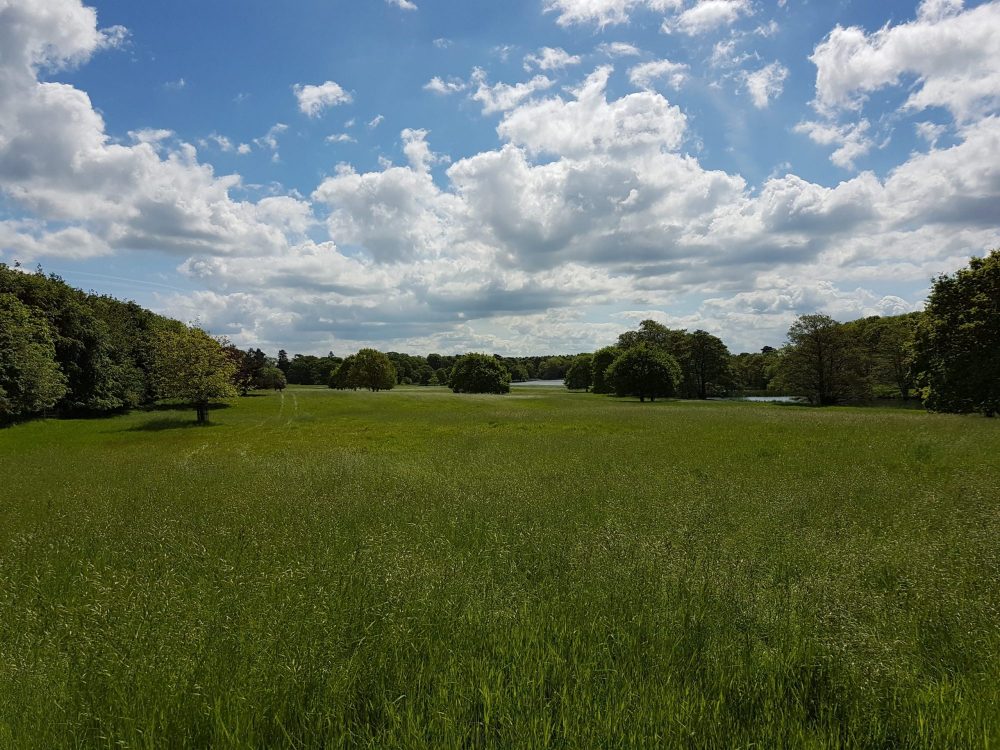
Biodiversity net gain across Hampshire
Hampshire development can encounter chalk rivers, ancient woodland, coastal bird habitats and heavily used urban green spaces within a relatively short distance. These are not interchangeable settings. A suitable biodiversity strategy must respond to the habitats on the site, the wider ecological network and the planning constraints affecting the proposal.
Collington Winter Environmental provides practical BNG advice for developers, planning consultants and landowners. We are based in Bolton and work throughout England, helping clients establish reliable baselines and develop proportionate delivery strategies. In Hampshire, that can mean examining how a housing layout protects a river corridor, whether new grassland is realistic on a particular soil, or how a scheme's BNG commitments interact with separate Solent nutrient neutrality requirements.
Growth pressures and early design decisions
South Hampshire accommodates substantial housing, employment and infrastructure pressures around Southampton, Portsmouth and neighbouring settlements. Elsewhere, growth around places such as Basingstoke, Winchester and Andover can bring development into contact with agricultural land, hedgerow networks and river catchments. Smaller rural applications may still affect ponds, woodland edges or important connecting habitats.
The most useful BNG decisions often happen before the first detailed metric is finalised. Access positions, drainage infrastructure, development platforms and lighting can determine which habitats remain viable. Treating biodiversity as leftover landscaping risks creating narrow, disturbed spaces that cannot achieve their predicted condition. Early involvement from a BNG consultant helps establish an ecological framework for the layout and identifies where additional surveys could affect the development programme.
Working with the correct planning authority
Planning responsibilities vary across Hampshire. District and borough councils determine many applications, while Southampton and Portsmouth operate as unitary authorities. Hampshire County Council has responsibilities including minerals and waste planning within its administrative area. The New Forest and South Downs national park authorities also have planning roles within their respective areas.
The first step is therefore to confirm the authority responsible for the actual site and proposal. Winchester City Council, Basingstoke and Deane Borough Council and Eastleigh Borough Council are examples of authorities a project may encounter, but requirements should always be checked directly. Local validation information, biodiversity policies and designated-site mitigation arrangements may influence the submission. Statutory BNG is one part of that assessment, not a replacement for the wider ecological case supporting permission.
Rivers, woodland and protected landscapes
The Test and Itchen are central to Hampshire's chalk river character. The River Itchen Special Area of Conservation demonstrates the sensitivity of these systems, where water quality, flows and riverside habitats matter alongside the development footprint. The county also contains extensive woodland, heathland, farmland and important pond networks.
Along the coast, the Solent supports intertidal habitats and internationally important bird populations. Relevant designations include the Solent Maritime Special Area of Conservation and Solent and Southampton Water Special Protection Area and Ramsar site. The New Forest has overlapping international and national ecological designations, while the South Downs brings another landscape context. Not every Hampshire site is connected to these receptors, but an early constraints review should investigate credible pathways rather than relying only on whether the application boundary overlaps a designation.
Solent nutrient neutrality and BNG overlap
Some Hampshire developments fall within catchments where nutrient impacts on protected Solent habitats require assessment and, where necessary, mitigation. The applicable position depends on the development, its wastewater and drainage arrangements, the affected catchment and current competent-authority advice. Nutrient neutrality is not a blanket requirement applying identically to every project in the county.
BNG and nutrient mitigation answer different questions. BNG measures habitat change through biodiversity units; nutrient mitigation addresses relevant nutrient effects on protected sites. A wetland or land-management project might contribute to both objectives, but that does not make the obligations interchangeable. Any combined approach must satisfy the rules for each scheme, including additionality, legal security and the avoidance of double counting. We help identify the overlap early so that specialist nutrient advice and biodiversity design can be coordinated.
Planning surveys around Hampshire habitats
Survey requirements should follow the site's actual features. Chalk grassland needs appropriate seasonal botanical assessment, while ponds may trigger great crested newt considerations. Woodland edges, buildings and mature trees can require bat assessment. Heathland and rough grassland may support reptiles, and coastal or nearby agricultural land can be relevant to wintering birds.
An initial appraisal identifies which further investigations are justified and when they should take place. Habitat condition evidence also needs suitable timing and sufficient detail for the metric. A winter visit may reveal structural features without resolving the composition of a grassland sward. We flag such limitations rather than presenting uncertain assumptions as settled facts. This helps clients build survey windows into option agreements, design programmes and planning submissions before avoidable seasonal delays arise.
Choosing and interpreting the biodiversity metric
Development within mandatory BNG generally needs to demonstrate at least 10% gain, subject to exemptions and the statutory rules. The statutory biodiversity metric assesses baseline habitats and proposed outcomes using factors such as extent, distinctiveness, condition and strategic significance. Delivery time and difficulty affect the value attributed to future habitats.
The small sites metric can simplify assessment where its eligibility criteria are satisfied. It is not suitable simply because an applicant describes a scheme as minor. Hedgerow units, watercourse units and area habitat units are accounted for separately, with relevant trading rules applying. A landscape plan showing additional trees cannot automatically resolve a watercourse deficit. We explain the calculation in practical terms, highlighting which design changes improve delivery and which numerical assumptions need stronger supporting evidence.
Hampshire's local nature recovery context
The Hampshire local nature recovery strategy area provides the relevant wider framework for nature recovery, including Southampton and Portsmouth. Teams should consult the latest strategy information and mapping, checking how the site relates to identified habitats, networks and opportunities. National park settings and neighbouring strategy areas may also matter where ecological connections cross administrative boundaries.
Appropriate projects might strengthen chalk river corridors, link woodland, improve grassland networks or support coastal habitat connectivity. Those possibilities need site-specific assessment, not a standard county-wide prescription. Strategic significance should be assigned in accordance with current metric guidance and the evidence available for the location. We help translate landscape-scale objectives into proposals that fit local soils, hydrology, existing habitats and practical management capacity, rather than adding ambitious habitat labels without a delivery route.
Making on-site habitat provision work
On-site measures should begin with avoiding unnecessary losses. Protecting an established woodland edge or retaining a connected hedgerow may provide a stronger ecological foundation than extensive replacement planting. River buffers, species-rich grassland and appropriately designed drainage habitats can contribute where their location, construction and management are suitable.
The relationship with future residents and occupiers is important. Dog walking, lighting, informal paths and maintenance access can undermine sensitive habitat objectives if overlooked. On chalk-influenced sites, soil fertility and substrate conditions can determine whether a proposed grassland community is realistic. Near watercourses, hydrology and regulatory permissions may constrain intervention. We work with landscape, drainage and planning teams to develop habitat proposals that can function as part of the completed development rather than existing only in a metric spreadsheet.
Finding suitable off-site units
If the scheme cannot meet its requirement through appropriate on-site provision, off-site BNG units may offer a route to compliance. The unit type, habitat trading requirements, location and allocation process all need checking. Availability of units somewhere in Hampshire does not mean those units necessarily suit every Hampshire development.
The metric's spatial rules can alter the quantity required, and sellers must provide an eligible, legally secured delivery arrangement. We help assess the proposed solution against the actual deficit rather than focusing on headline unit prices. Nutrient credits should not be confused with biodiversity units: purchasing one does not automatically provide the other. Statutory biodiversity credits are a separate last-resort option, used only after the required consideration of on-site and off-site delivery routes.
Habitat banking opportunities for landowners
Hampshire landowners considering habitat banking need a clear understanding of their starting position. Arable land, improved grassland or degraded habitat may offer enhancement opportunities, but existing high-value features must be recognised and protected. Chalk grassland, wetland or woodland creation each involves different establishment risks, timescales and management demands.
Feasibility work should consider ecological suitability, likely buyer requirements, access, tenure and the costs of long-term management. Existing agri-environment funding or nutrient mitigation commitments require careful review before assuming another income stream can be added. Any stacking of environmental payments must comply with the applicable rules and additionality requirements. A habitat bank should be approached as a long-term land-management business decision, supported by realistic costs and legal advice, rather than a guaranteed return from unused acreage.
Documentation, management and our support
The biodiversity gain plan sets out how the statutory gain requirement will be met and requires approval before commencement where the biodiversity gain condition applies. Supporting application information should establish a credible route to delivery rather than leaving fundamental habitat deficits unresolved until after permission.
A habitat management and monitoring plan translates commitments into establishment methods, management tasks, monitoring and remedial action. Significant on-site gains and registered off-site gains require at least 30 years of secured maintenance under the applicable arrangements. Collington Winter Environmental helps connect survey evidence, metric calculations and management proposals into a coherent package. For advice on a Hampshire development, habitat bank or scheme involving Solent nutrient considerations, call 01204 939 608 or contact us.
Frequently asked questions
+Does achieving BNG remove Solent nutrient neutrality requirements?
No. BNG and nutrient mitigation address different environmental requirements. A Hampshire scheme must establish which obligations apply and provide evidence for each, even where a shared land-management project is proposed.
+Can a Hampshire wetland deliver both biodiversity units and nutrient mitigation?
Potentially, but this requires careful ecological, legal and financial assessment. Each claimed outcome must meet the relevant scheme rules, including additionality and safeguards against double counting. A wetland should not be marketed as delivering both without that assessment.
+Who deals with BNG for development inside a Hampshire national park?
The relevant national park authority has planning responsibilities within its area. Confirm the site's boundary and application arrangements with the New Forest National Park Authority or South Downs National Park Authority as appropriate.
+Why do the Test and Itchen matter when planning a BNG scheme?
Their chalk river habitats and associated ecological networks can be sensitive to changes in water quality, flows and adjacent land use. River-related impacts may require separate assessment, and any watercourse units must be calculated under the relevant metric rules.
+Will every Hampshire site need wintering bird surveys?
No. They are relevant where the location and likely impacts create a credible concern, including some coastal sites and land used by birds associated with protected areas. Survey scope should be based on ecological evidence.
+Can chalk grassland be created on any Hampshire development?
No. Suitable soils, nutrient levels, establishment methods and management are essential. A habitat proposal must reflect actual site conditions and a realistic target condition, rather than relying on Hampshire's general association with chalk landscapes.