
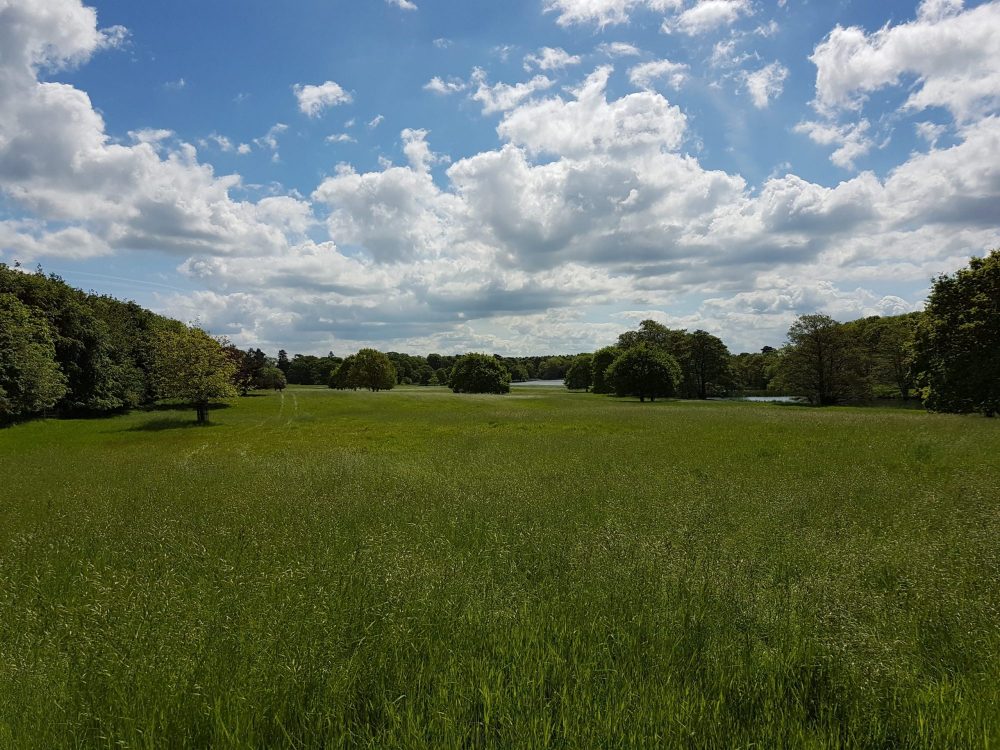
Biodiversity planning on the north bank of the Tyne
Newcastle development can involve city-centre plots, established residential areas, former employment land and the rural northern and western edges of the city. These settings create different opportunities for habitat retention and creation. Collington Winter Environmental helps teams understand the ecological baseline and test a realistic biodiversity net gain approach before the final layout leaves few options.
We are based in Bolton and work throughout England, including Newcastle upon Tyne. Our service brings together habitat assessment, statutory metric calculations and management planning. We can support an applicant who needs to establish a submission strategy or a landowner exploring an off-site habitat project. We do not assume that an urban address removes ecological constraints or that a rural address guarantees surplus units.
Newcastle City Council and neighbouring authorities
Newcastle City Council is the local planning authority for ordinary development within the city boundary. Gateshead Council lies across the Tyne, while North Tyneside Council and Northumberland County Council are relevant to nearby sites beyond Newcastle. Descriptions such as Tyneside or Greater Newcastle do not identify a single planning authority, so the actual application boundary is the starting point.
We review the relevant local plan, ecological validation expectations and mapped designations. Cross-boundary ecological connections may be important even where only one council determines the application. Riverside proposals can also require coordination with flood-risk, drainage and other regulatory processes. A gain calculation is one component of the evidence and does not replace the assessment of the project's wider environmental effects.
River corridors, denes and the urban fringe
The Tyne and Ouseburn provide a distinctive river setting, while wooded denes, parks, mature trees, ponds and agricultural margins add habitat diversity across Newcastle. Former industrial land may retain patches of grassland, scrub or open mosaic vegetation that warrant proper assessment. Close to the city, the landscape can shift quickly from heavily built land to more connected rural habitats.
Potential survey considerations include bats in buildings and trees, nesting birds, badgers, great crested newts near suitable ponds, and otters or water voles where suitable aquatic habitat exists. Lighting can affect bat movement along vegetated corridors and watercourses even where no habitat is physically removed. Species survey needs should be determined from habitat suitability and evidence, not from an assumption that every riverbank supports the same protected species.
How statutory biodiversity net gain applies
For development in Newcastle that falls within England's statutory BNG regime, the national requirement is at least 10% biodiversity net gain measured using the statutory biodiversity metric. Applicability, commencement and any exemption should be checked for the particular application against current legislation and guidance. Local policy may introduce additional expectations; the national minimum should not be assumed to settle every planning requirement. An exemption from statutory BNG does not remove protected-species or designated-site duties.
The assessment starts with a defensible pre-development baseline. Habitat type, area or length, condition and strategic significance feed into the calculation, alongside the proposed retention, enhancement and creation. Habitat area units, hedgerow units and watercourse units are assessed separately and cannot simply be exchanged for one another. Trading rules also govern which habitats can address particular losses. The metric accounts for delivery risks, including the time habitats take to develop and the difficulty of establishing them. 3
Avoiding and minimising harm should inform the design before residual requirements are addressed. The applicable biodiversity gain hierarchy guides consideration of on-site habitat delivery, off-site units and, as a last resort, government statutory biodiversity credits. Any application-specific modifications to that hierarchy should be checked against current guidance. Private off-site units and government credits are different products, with different procedures and evidence requirements; purchasing either without checking the actual deficit can create avoidable cost.
Off-site delivery can take place on the developer's other land or through a third-party provider. The statutory spatial risk multiplier influences how much off-site delivery is needed. For area habitats and hedgerows, relevant local planning authority and National Character Area relationships matter; watercourses use their applicable catchment geography. We check the current metric rules for the proposal rather than assuming that a county boundary, mileage radius or LNRS boundary determines the answer.
A biodiversity gain plan normally requires approval by the planning authority before development can commence under the statutory biodiversity gain condition. Planning-stage baseline information and an outline gain strategy are therefore important, but they are not automatically the approved final plan. The plan must reconcile the permitted layout, completed metric and the legal evidence for any off-site allocation or statutory credits. Phased schemes have additional plan requirements that should be considered from the outset.
Significant on-site habitat enhancements and registered off-site gains must be secured and managed for at least 30 years under the applicable rules. Off-site land needs an appropriate legal agreement, such as a section 106 obligation or conservation covenant, registration on the biodiversity gain sites register and allocation to the development. A habitat management and monitoring plan should identify responsibilities, target conditions, management actions, reporting and remedial measures. The required management period and its start point should be made explicit in the agreement rather than treated as an informal promise.
Making riverside and urban habitat proposals credible
A riverside planting plan must account for flood conditions, bank access and the existing vegetation. New lighting, retaining structures or paths can influence how wildlife uses a corridor, so simply increasing planted area may not resolve the ecological effects. Where habitat is retained, construction access and temporary works should be designed to protect it as well as the completed development.
For housing and commercial layouts, we assess whether proposed grassland, scrub, hedges and drainage features will have enough space to reach their intended condition. Access, visibility and maintenance need to be reconciled with the ecological objectives. A frequently mown amenity area should not be labelled as a species-rich meadow merely to improve the metric. We can model alternative layouts and highlight the implications of changing the habitat specification.
The North of Tyne nature recovery context
Newcastle falls within the North of Tyne LNRS area, which also includes North Tyneside and Northumberland. The responsible authority is the North East Combined Authority. Nearby land south of the Tyne falls within a different LNRS geography, so checking the actual strategy boundary is important for projects and potential habitat providers around the river. 1
We use the relevant strategy mapping and measures to understand where an intervention can support a wider ecological network. This is separate from testing the statutory spatial risk multiplier for an off-site purchase. A provider described as being in the North East is not automatically local for metric purposes, and the same combined authority label does not establish the appropriate multiplier or the correct habitat trading match.
A measured approach to habitat banking near Newcastle
Landowners in the surrounding countryside may consider grassland restoration, hedgerow enhancement or wetland creation. The ecological opportunity depends on the baseline, soils, drainage, existing habitat connections and achievable management. Land that already carries conservation commitments requires careful review before additional gains can be claimed for sale.
We can help identify a suitable habitat concept, calculate potential uplift and prepare management recommendations. Commercial feasibility should include establishment costs, monitoring, legal arrangements and a contingency for corrective work. A bank also needs the appropriate legal security and registration before its gains can be allocated in the statutory process. Prospective owners should avoid assuming that proximity to Newcastle guarantees demand, an immediate sale or a particular unit price.
Working with Collington Winter Environmental
Our services for Newcastle can begin with an initial ecological review or a preliminary ecological appraisal, followed by habitat mapping and condition assessment where needed. We can prepare statutory biodiversity metric calculations, compare design options, identify an off-site deficit and support biodiversity gain plan preparation. Where protected-species issues arise, we advise on survey needs, mitigation and any licensing route rather than treating the metric as a substitute for species assessment.
Collington Winter Environmental is led by Managing Director Olivia Collington, a Chartered Environmentalist with Natural England bat and great crested newt licences and experience using DEFRA's Statutory Biodiversity Metric. Licence scope and any project-specific authorisation still need to be checked before licensed work is undertaken. Professional credentials support competent assessment; they do not guarantee permission, a licence or a particular biodiversity outcome.
We can also develop habitat management and monitoring plans and help landowners assess the ecological feasibility of habitat banking. The scope should be agreed around the site, programme and available evidence. Legal agreements, conveyancing and specialist financial advice remain matters for appropriately qualified advisers, with ecological input coordinated where required.
To discuss a development or landholding in Newcastle, contact Collington Winter Environmental on 01204 939 608. A site plan, planning reference if available, proposed layout and target programme help us identify the next useful step. Contacting us before clearing vegetation or finalising the design allows more options to be considered and reduces the risk of making decisions without an adequate ecological baseline.
Frequently asked questions
+Which LNRS covers Newcastle upon Tyne?
Newcastle is within the North of Tyne LNRS area, alongside North Tyneside and Northumberland. The North East Combined Authority is the responsible authority.
+Can habitat south of the Tyne be used for a Newcastle development?
It may be suitable, but the actual habitat deficit, trading rules, legal security and statutory spatial assessment must be checked. Crossing the river is neither an automatic exclusion nor proof of equivalence.
+Is 10% biodiversity net gain required for every Newcastle project?
No. The statutory requirement applies to development within scope, subject to the relevant commencement rules and exemptions. We check applicability and local policy for the actual proposal; other ecological duties may apply even where statutory BNG does not.
+When must the biodiversity gain plan be approved?
For development subject to the statutory biodiversity gain condition, the biodiversity gain plan normally needs planning authority approval before development commences. Phased development has additional requirements. Planning application information should be prepared early enough to support a deliverable final plan.
+How long must biodiversity habitats be managed?
Significant on-site habitat enhancements and registered off-site gains must be secured for at least 30 years under the applicable rules. The legal agreement and management plan should define the start point, responsibilities, monitoring and corrective action.
+How do I contact your BNG consultants for Newcastle?
Call Collington Winter Environmental on 01204 939 608 to discuss your Newcastle site. We work throughout England from our Bolton office. Share a location plan, proposed works and programme so we can advise on an appropriate initial scope.