
BNG across farmland, industrial landscapes and upland edges
Staffordshire brings together major employment corridors, market towns, agricultural land, heathland and part of the Peak District. Development proposals can therefore encounter very different ecological baselines. A site near a canal or former industrial area may have a habitat mosaic unlike nearby improved farmland, while a rural holding may contain valuable older boundaries or wet ground that should be retained.
Collington Winter Environmental provides biodiversity net gain consultancy across Staffordshire from our Bolton office, working throughout England. We support development teams with surveys, statutory metric calculations and gain strategies, and help landowners assess habitat banking opportunities. Our advice starts with the site's ecological evidence and long-term management capacity rather than an assumption that every spare field or landscape strip can produce the same habitat outcome.
District councils, Stoke-on-Trent and the national park
Local planning authorities include Stafford Borough Council, Staffordshire Moorlands District Council, Newcastle-under-Lyme Borough Council, East Staffordshire Borough Council, Lichfield District Council, Cannock Chase District Council, South Staffordshire Council and Tamworth Borough Council. Stoke-on-Trent City Council is a separate unitary authority. Staffordshire County Council has relevant county planning functions, including minerals and waste.
The Peak District National Park Authority handles relevant planning applications within the national park, including its Staffordshire portion. We confirm the authority using the actual site rather than the postal town. Current local policy, validation requirements and site-specific constraints then inform the ecological scope. There is no single district-level planning submission standard that can be assumed to cover every Staffordshire proposal.
Trent valley, Cannock Chase and the Moorlands
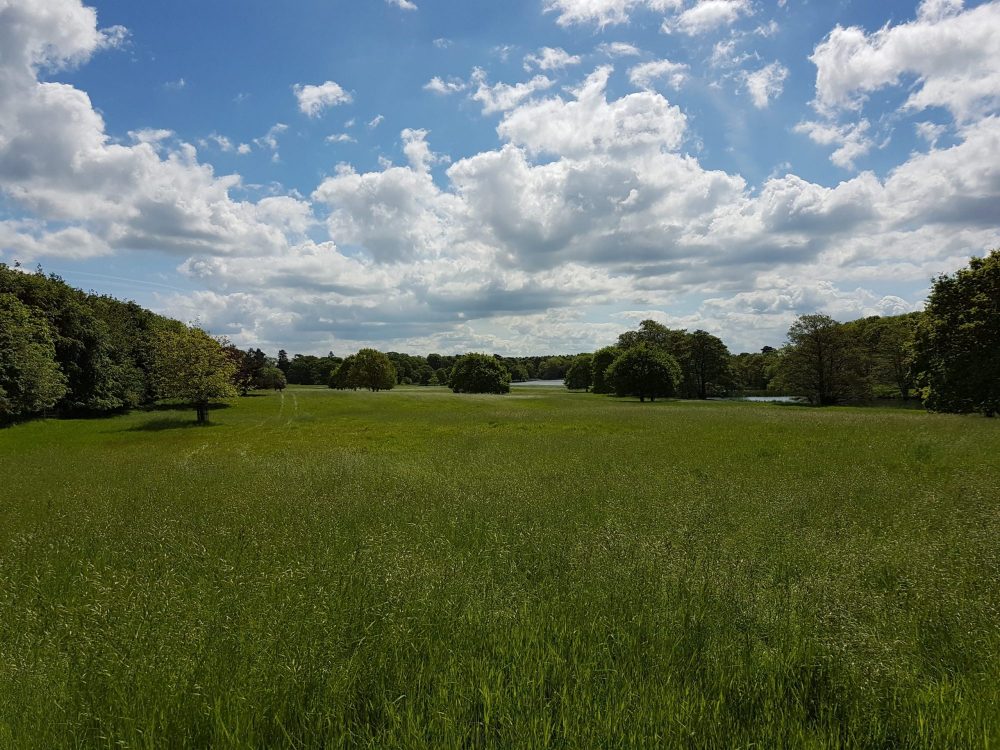
The Trent and its tributaries, including the Dove and Churnet systems, create river and valley landscapes through the county. Cannock Chase includes significant heathland and woodland settings, while the Staffordshire Moorlands bring upland habitats and connections into the Peak District. Elsewhere, hedgerows, ponds, agricultural fields, canals and former industrial sites create a varied lowland baseline.
Survey considerations can include bats in buildings and trees, nesting birds, badgers, great crested newts near suitable pond networks, and otters or water voles along appropriate watercourses. Sensitive designated landscapes and sites can raise additional assessment requirements. We distinguish likely survey topics from confirmed species records: the presence of a pond or canal does not establish that a protected species is present, but it may justify further investigation.
How statutory biodiversity net gain applies
For development in Staffordshire that falls within England's statutory BNG regime, the national requirement is at least 10% biodiversity net gain measured using the statutory biodiversity metric. Applicability, commencement and any exemption should be checked for the particular application against current legislation and guidance. Local policy may introduce additional expectations; the national minimum should not be assumed to settle every planning requirement. An exemption from statutory BNG does not remove protected-species or designated-site duties.
The assessment starts with a defensible pre-development baseline. Habitat type, area or length, condition and strategic significance feed into the calculation, alongside the proposed retention, enhancement and creation. Habitat area units, hedgerow units and watercourse units are assessed separately and cannot simply be exchanged for one another. Trading rules also govern which habitats can address particular losses. The metric accounts for delivery risks, including the time habitats take to develop and the difficulty of establishing them. 3
Avoiding and minimising harm should inform the design before residual requirements are addressed. The applicable biodiversity gain hierarchy guides consideration of on-site habitat delivery, off-site units and, as a last resort, government statutory biodiversity credits. Any application-specific modifications to that hierarchy should be checked against current guidance. Private off-site units and government credits are different products, with different procedures and evidence requirements; purchasing either without checking the actual deficit can create avoidable cost.
Off-site delivery can take place on the developer's other land or through a third-party provider. The statutory spatial risk multiplier influences how much off-site delivery is needed. For area habitats and hedgerows, relevant local planning authority and National Character Area relationships matter; watercourses use their applicable catchment geography. We check the current metric rules for the proposal rather than assuming that a county boundary, mileage radius or LNRS boundary determines the answer.
A biodiversity gain plan normally requires approval by the planning authority before development can commence under the statutory biodiversity gain condition. Planning-stage baseline information and an outline gain strategy are therefore important, but they are not automatically the approved final plan. The plan must reconcile the permitted layout, completed metric and the legal evidence for any off-site allocation or statutory credits. Phased schemes have additional plan requirements that should be considered from the outset.
Significant on-site habitat enhancements and registered off-site gains must be secured and managed for at least 30 years under the applicable rules. Off-site land needs an appropriate legal agreement, such as a section 106 obligation or conservation covenant, registration on the biodiversity gain sites register and allocation to the development. A habitat management and monitoring plan should identify responsibilities, target conditions, management actions, reporting and remedial measures. The required management period and its start point should be made explicit in the agreement rather than treated as an informal promise.
Separating BNG from other ecological planning duties
A Staffordshire development may need to address recreational pressure, disturbance or other effects on designated sites independently of its habitat unit balance. For example, proposals with a relevant relationship to Cannock Chase require careful checking of the applicable planning and habitats assessment requirements. A positive metric cannot be used to bypass those requirements or justify otherwise unacceptable harm.
On the development site, we coordinate retained habitats, drainage, lighting and construction access. A hedge retained on a drawing still needs protection from working areas, service trenches and inappropriate management. New grassland requires soil and maintenance conditions that support its intended habitat type. Identifying these details early makes it easier to judge how much gain is genuinely deliverable on site and whether an off-site contribution is needed.
Staffordshire and Stoke-on-Trent nature recovery
Staffordshire County Council leads the Staffordshire and Stoke-on-Trent LNRS. The strategy area's inclusion of Stoke-on-Trent does not merge the city and district planning authorities. In the Peak District, the national park contributes to several LNRS areas, so proposals should use the strategy covering the actual land rather than assume there is one statutory strategy for the whole park. 7
We examine relevant measures and mapped opportunities when developing habitat proposals and assessing strategic significance. A generic commitment to increase woodland or wetlands is not enough if the chosen habitat is inappropriate for that location. For off-site delivery, we also check the statutory spatial risk rules independently: being in Staffordshire, or within the same LNRS, does not by itself establish an unreduced multiplier.
Habitat banking for Staffordshire landowners
A holding may offer opportunities for meadow restoration, hedgerow enhancement or wetland creation, but suitability must be tested. Soil nutrients, water regimes, existing conservation value and access for management can make a large difference to delivery. Existing environmental agreements and other obligations should be reviewed before any additional biodiversity gain is offered for sale.
We can establish the baseline, compare interventions and provide a management and monitoring framework. A realistic business plan includes establishment, maintenance, legal security, registration and contingency costs. Owners should obtain appropriate legal and financial advice on contracts, tax and long-term land-use implications. No forecast should assume immediate demand from nearby development: habitat type, geography, timing and the statutory trading rules all influence whether a particular bank can meet a buyer's requirement.
Working with Collington Winter Environmental
Our services for Staffordshire can begin with an initial ecological review or a preliminary ecological appraisal, followed by habitat mapping and condition assessment where needed. We can prepare statutory biodiversity metric calculations, compare design options, identify an off-site deficit and support biodiversity gain plan preparation. Where protected-species issues arise, we advise on survey needs, mitigation and any licensing route rather than treating the metric as a substitute for species assessment.
Collington Winter Environmental is led by Managing Director Olivia Collington, a Chartered Environmentalist with Natural England bat and great crested newt licences and experience using DEFRA's Statutory Biodiversity Metric. Licence scope and any project-specific authorisation still need to be checked before licensed work is undertaken. Professional credentials support competent assessment; they do not guarantee permission, a licence or a particular biodiversity outcome.
We can also develop habitat management and monitoring plans and help landowners assess the ecological feasibility of habitat banking. The scope should be agreed around the site, programme and available evidence. Legal agreements, conveyancing and specialist financial advice remain matters for appropriately qualified advisers, with ecological input coordinated where required.
To discuss a development or landholding in Staffordshire, contact Collington Winter Environmental on 01204 939 608. A site plan, planning reference if available, proposed layout and target programme help us identify the next useful step. Contacting us before clearing vegetation or finalising the design allows more options to be considered and reduces the risk of making decisions without an adequate ecological baseline.
Frequently asked questions
+Does Staffordshire have one planning authority for BNG?
No. District and borough councils, Stoke-on-Trent City Council, Staffordshire County Council and the Peak District National Park Authority have different planning roles. The site and application type determine the relevant authority.
+Does BNG replace Cannock Chase mitigation requirements?
No. Applicable designated-site assessment and mitigation requirements remain separate. A positive biodiversity metric does not remove duties relating to protected sites or other ecological impacts.
+Is 10% biodiversity net gain required for every Staffordshire project?
No. The statutory requirement applies to development within scope, subject to the relevant commencement rules and exemptions. We check applicability and local policy for the actual proposal; other ecological duties may apply even where statutory BNG does not.
+When must the biodiversity gain plan be approved?
For development subject to the statutory biodiversity gain condition, the biodiversity gain plan normally needs planning authority approval before development commences. Phased development has additional requirements. Planning application information should be prepared early enough to support a deliverable final plan.
+How long must biodiversity habitats be managed?
Significant on-site habitat enhancements and registered off-site gains must be secured for at least 30 years under the applicable rules. The legal agreement and management plan should define the start point, responsibilities, monitoring and corrective action.
+How do I contact your BNG consultants for Staffordshire?
Call Collington Winter Environmental on 01204 939 608 to discuss your Staffordshire site. We work throughout England from our Bolton office. Share a location plan, proposed works and programme so we can advise on an appropriate initial scope.