
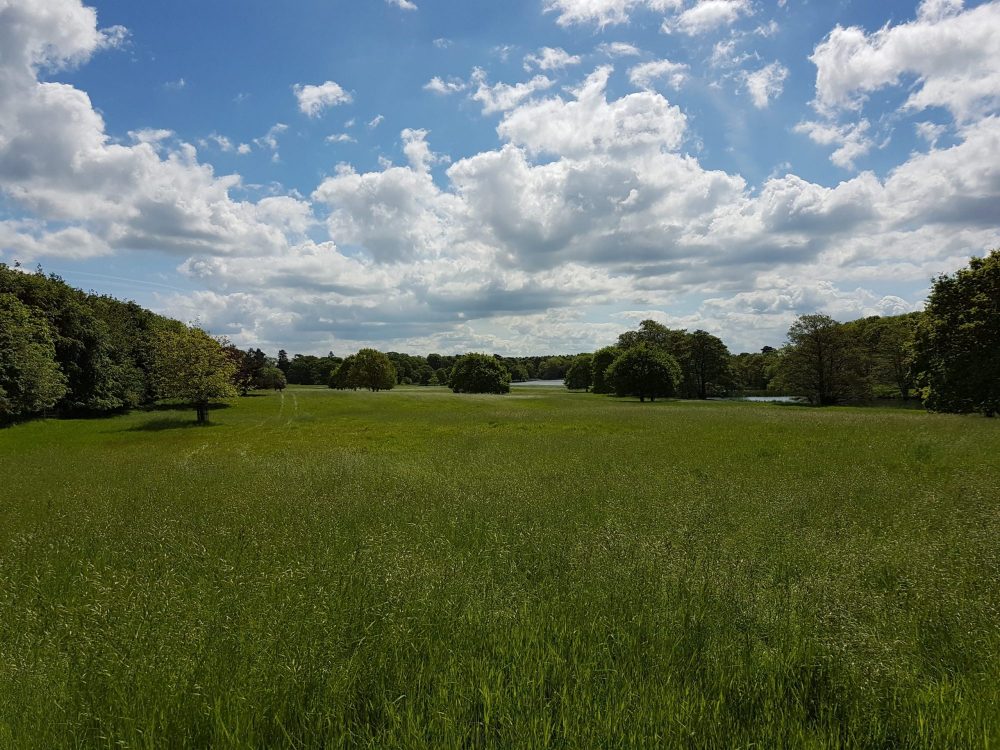
Biodiversity net gain on healthcare estates
BNG for hospitals must work around facilities that cannot simply pause operations. Emergency routes, patient transfers, deliveries, utilities and future clinical capacity all influence habitat retention and creation. Clinics, medical centres and care homes face similar decisions on tighter sites, often with limited maintenance capacity and heavily used gardens.
Collington Winter provides ecology and landscape services throughout England. The aim is to coordinate measurable habitat delivery with a workable healthcare landscape, without presenting patient amenity as automatic biodiversity credit. A BNG consultant can establish evidence before design decisions become difficult to change.
Check planning routes and exemptions
Healthcare has no general exemption from mandatory BNG. A hospital extension, clinic or care home requiring full planning permission may be in scope. Genuine permitted development is exempt, but an application requiring full permission should not assume the same treatment. Application dates and transitional arrangements also matter.
For applications from 6 August 2026, a red line site of 0.2 hectares or below is exempt unless on-site priority habitat is negatively affected. Qualifying whole temporary development may also be exempt with removal and reinstatement within five years or less, subject to that restriction. A temporary diagnostic unit alongside permanent enabling works needs careful assessment, not an assumption based on the unit alone. Review official exemption guidance and our BNG exemptions guide.
Establish the statutory framework
Where mandatory BNG applies, the standard objective is at least 10% more biodiversity value than the baseline, measured through the statutory biodiversity metric. The calculation concerns habitats, not patients served, clinical importance or the proportion labelled landscape. Habitat type, extent, condition and location affect the result. See government guidance on understanding BNG.
The biodiversity gain plan requires approval before commencement. Significant on-site gains and off-site gains must be secured and maintained for at least 30 years. Protected species and designated-site requirements remain separate, as do other planning obligations. A unit surplus does not authorise otherwise unlawful ecological impacts.
Build an operational constraints plan
Overlay the ecological baseline with emergency access, fire access, patient transport, deliveries, waste handling and maintenance routes before locating habitats. Include service yards, underground utilities, ventilation infrastructure and temporary clinical accommodation. Discuss plans with staff who understand how the estate functions outside normal office hours.
A bed beside a quiet entrance may experience little disturbance, while an apparently unused verge may be essential for emergency manoeuvring. Mapping these differences avoids promises later displaced for operational reasons. Include compounds and diversions, not just permanent buildings and parking. Establish which constraints are fixed and which can be adjusted through coordinated design.
Protect access without treating every margin alike
Emergency access must remain workable, but not all peripheral vegetation needs identical treatment. Examine turning requirements, visibility, inspection access and likely vehicle overrun with designers. Habitat retention may be possible beyond the operational envelope, particularly where hedgerows or trees connect to wider green infrastructure.
Service yards are poor locations for delicate habitat if storage and deliveries will repeatedly disturb it. Separation and clear drawings reduce accidental encroachment. These are project-specific considerations, not universal healthcare planting setbacks. Verify the actual operational requirements with the provider and relevant specialists, rather than relying on assumptions from another hospital.
Coordinate clinical and infection-control input
Infection-control teams may have specific concerns about planting, water features, irrigation, maintenance or materials near vulnerable patient areas. Engage them while choices remain flexible. Their advice should inform design alongside ecology, accessibility, engineering and clinical use, rather than arriving after habitat commitments are finalised.
Do not describe a blanket ban on ponds, soil or naturalistic planting as a universal BNG requirement. Equally, do not assume every feature suits every clinical space. Record agreed constraints and their implications for delivery. Where an on-site option is unsuitable, reassess the strategy instead of retaining an undeliverable metric assumption.
Distinguish therapeutic gardens from habitat gains
Therapeutic gardens can provide seating, sensory interest, shade and outdoor activity. Those benefits are valuable but are not themselves biodiversity units. A garden dominated by paving, containers or frequently replaced seasonal planting may offer limited qualifying habitat compared with its apparent greenness.
For care home BNG, consider residents, carers and maintenance staff throughout the year. Accessible paths can coexist with habitat, but constant access may constrain achievable condition. Keep the wellbeing brief and biodiversity calculation separate, then identify improvements genuinely serving both. Avoid claiming clinical outcomes or metric benefits without appropriate evidence.
Test drainage habitats against water conditions
Sustainable drainage systems can sometimes support habitat delivery, but a drainage label is not proof of ecological value. Establish whether a feature will normally be dry, seasonally wet or permanently wet. Check water quality, inflows, shading, sediment removal and maintenance access before selecting habitat classification and target condition.
A frequently disturbed basin receiving runoff from busy areas should not be modelled as high-quality wetland without evidence. Coordinate drainage maintenance with ecological prescriptions. If they conflict, revise the design or metric instead of leaving incompatible instructions for facilities staff. Distinguish engineering capacity from the ecological condition the project can maintain.
Address lighting, courtyards and roofs early
Hospitals often need night-time lighting. Assess ecological sensitivity alongside safety, security, clinical access and wayfinding. Where appropriate, consider luminaire placement, shielding, controls and light distribution near retained habitat. No single specification resolves every site, so recommendations should respond to survey findings and operational requirements.
Courtyards may have deep shade, restricted soil volumes and limited connectivity. Green roofs face structural, growing medium, drought and maintenance access constraints. Neither automatically compensates for ground-level habitat loss. Test classification, target condition and long-term management before relying on units. Replacement planting should remain consistent with the ecological specification rather than simply the original visual design.
Select delivery options appropriately
The August 2026 amendments allow minor developments still subject to BNG to choose off-site delivery directly. Other categories must follow their applicable hierarchy. Statutory biodiversity credits remain a last resort, not an interchangeable name for privately purchased units.
For off-site gains, assess habitat suitability, trading rules, location effects, legal security, registration and allocation before procurement. Our BNG units guide explains the route. Off-site delivery does not remove the need to assess on-site losses or address species and designated-site constraints. Agree evidence and commercial milestones without assuming availability or gain plan approval.
Plan expansion without double counting
Healthcare estates may develop through ward blocks, diagnostics projects, energy infrastructure and parking changes. Identify future development areas before assigning long-term habitat commitments. Creating gain habitat on the next planned building plot introduces avoidable conflicts between estate strategy and secured delivery.
Formally phased permissions have special overall and phase biodiversity gain plan arrangements. Confirm the applicable process rather than treating every construction package as independent. Maintain version-controlled plans and calculations so retained habitat, losses and allocated gains remain traceable. See planning practice guidance for the national framework. A later application does not automatically cancel an earlier habitat obligation.
Hypothetical example: diagnostics extension
This example is illustrative, not a Collington Winter case study. A hospital proposes a diagnostics extension beside a service road. Surveys identify amenity grassland, trees and a boundary hedge. Operational review shows the proposed habitat strip would obstruct maintenance access to buried services.
The team relocates the proposal, retains the hedge where feasible and tests a drainage basin against its actual wetting pattern. It does not claim therapeutic seating as metric credit. If the assessment identifies a shortfall, suitable off-site delivery is evaluated. The example does not predict cost, unit requirements or a planning decision.
Healthcare BNG checklist
- Verify permission route, application date, boundary and exemptions.
- Overlay habitats with ambulance routes, utilities and service yards.
- Obtain clinical, infection-control and facilities input where relevant.
- Separate therapeutic benefits from qualifying habitat value.
- Test drainage, courtyard and roof assumptions against realistic conditions.
- Coordinate lighting recommendations with safety needs.
- Protect future expansion routes from avoidable habitat conflicts.
- Confirm funding, management responsibility and monitoring access.
- Preserve habitat requirements in facilities procurement and handover.
Fund the commitment and complete handover
A 30-year habitat commitment extends beyond a construction defects period or short facilities contract. Identify who funds establishment, management, monitoring and corrective work after contractors change. Do not assume a general grounds budget covers the full obligation.
A habitat management and monitoring plan translates ecological targets into practical responsibilities. Coordinate it with the biodiversity gain plan, as-built records and facilities instructions. Mapped compartments and reporting arrangements should suit the actual habitats. See BNG for schools and education for another operational estate context, or contact Collington Winter to discuss your healthcare project.
Official guidance reviewed on 18 November 2026. Confirm current guidance, permission history and project-specific requirements before relying on a compliance route.
Frequently asked questions
+Are NHS hospital developments exempt from BNG?
There is no blanket exemption based on NHS ownership or healthcare use. Permission route, application date and specific criteria determine the position. Some permitted development and qualifying small or temporary schemes are exempt, while full planning applications may need mandatory BNG.
+Can a small medical centre use the 0.2-hectare exemption?
Potentially, for applications from 6 August 2026 where the whole red line is 0.2 hectares or below and on-site priority habitat is not negatively affected. Measure the application site, not just the building. Retain evidence and check transitional arrangements.
+Can a sensory garden meet care home BNG?
It may contribute, but therapeutic purpose does not establish units. The metric assesses actual habitats. Seating, paving and ornamental containers may contribute little or no habitat value. Test planting, access pressure, management and achievable condition before relying on the garden.
+Are wildlife ponds prohibited at hospitals?
There is no universal BNG prohibition. Suitability depends on clinical context, water management, safety and maintenance. Consult healthcare teams and ecological specialists. Do not propose a pond where those requirements conflict or the intended condition is unrealistic.
+Can a green roof replace lost habitat?
It may contribute qualifying units but is not automatically equivalent to the habitat removed. Trading requirements, classification, establishment risks and target condition matter. Structural capacity, growing medium and maintenance access also affect whether it is a credible long-term commitment.
+How should ambulance access influence habitats?
Map operational requirements before fixing habitat proposals. Avoid vulnerable habitat where overrun or maintenance will repeatedly damage it. This does not mean removing all nearby vegetation: examine retention beyond the necessary operational envelope with the relevant design team.
+Who funds management after construction?
Establish arrangements consistent with the planning and legal obligations. The estate owner, manager or off-site provider may perform different roles. Confirm establishment, monitoring and corrective work explicitly rather than assuming a short facilities contract covers the commitment.
+Can later expansion remove secured gain habitat?
Do not assume a later application cancels existing obligations. Review the original permission, legal security and management commitments. Changes may need agreement and revised delivery arrangements. Estate-wide planning helps avoid securing habitat on land already intended for future development.
About the author
Olivia Collington
Olivia is Managing Director of Collington Winter Environmental and a Chartered Environmentalist with the Institute of Environmental Sciences. She holds Natural England bat, great crested newt and badger mitigation licences and specialises in Biodiversity Net Gain assessments using the statutory metric.
View profileRelated reading
- Biodiversity Net Gain 2024: Guidance on new rules
- Habitat Bank Creation: What you need to know
- Alternative Farm Income: Maximising Opportunities with BNG & Habitat Banking
- What is Biodiversity Net Gain? A Plain-English Guide
- BNG Consultants Bolton: Biodiversity Net Gain Experts
- BNG Consultants Manchester: Biodiversity Net Gain Experts