
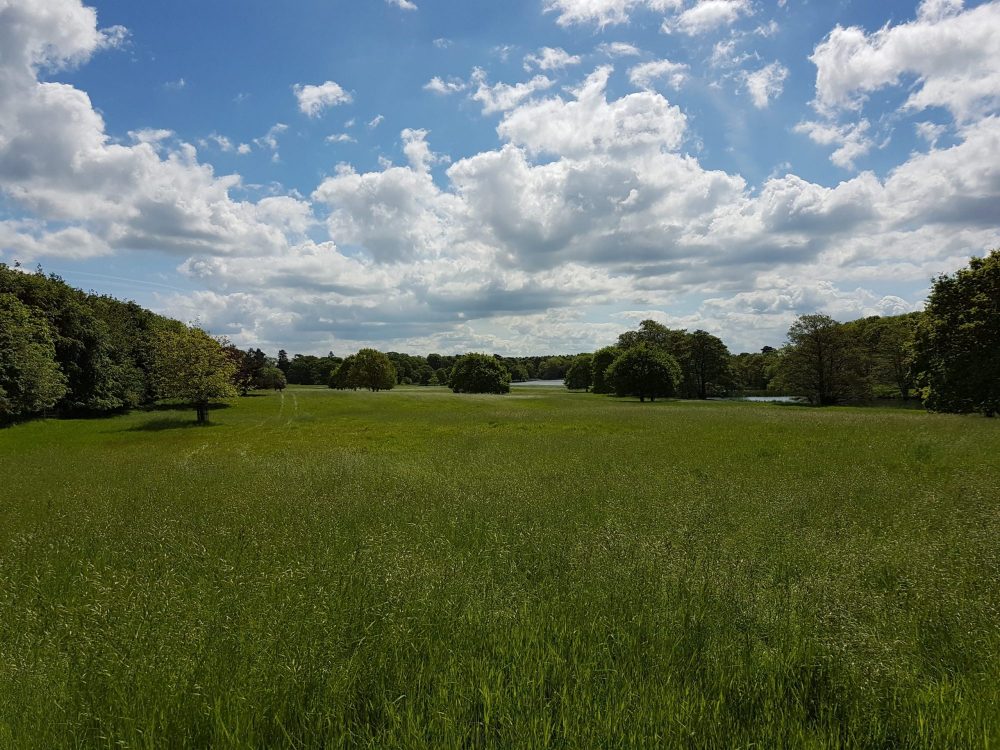
Biodiversity Net Gain plan in Cheshire
If you hold planning permission in Cheshire East, Cheshire West and Chester, Warrington or Halton, you must secure local authority approval of a statutory Biodiversity Net Gain plan (BNG plan) before development can commence. Whether you are building housing in Chester, Wilmslow, Macclesfield, Knutsford, Northwich, Crewe or Warrington, redeveloping commercial estates along the M6 and M56 corridors, or converting rural farm complexes, your BNG plan must prove a minimum 10 percent measurable biodiversity gain secured for at least 30 years.
Headquartered nearby in Bolton, Collington Winter Environmental prepares statutory Biodiversity Gain Plans across all four Cheshire unitary authorities. Led by chartered ecologist Olivia Collington CEnv, our team combines close familiarity with Cheshire's habitats and council ecology officers with practical, commercially minded advice. Explore our BNG consultants in Cheshire page, check our urgent instruction service for tight deadlines, or contact us for a free initial chat.
Cheshire local planning authorities and ecological review
Cheshire is covered by four unitary authorities: Cheshire East Council, Cheshire West and Chester Council, Warrington Borough Council and Halton Borough Council. Each enforces Schedule 7A of the Town and Country Planning Act 1990 alongside local plan biodiversity policies and the Cheshire and Warrington Local Nature Recovery Strategy (LNRS).
Council ecologists across Cheshire review pre-commencement Biodiversity Gain Plans carefully. They check that baseline surveys accurately reflect field conditions, that strategic significance multipliers match Cheshire LNRS priority areas, that hedgerow and pond losses respect statutory trading rules, and that proposed 30-year management plans are realistic for the end landowner or management company.
Cheshire habitats that influence BNG plan outcomes
Cheshire's lowland pastoral landscape, meres, mosses and river valleys create distinctive BNG plan considerations:
- Cheshire field ponds and marl pits: Cheshire has one of the highest densities of field ponds in England, closely associated with great crested newts. Ponds carry high biodiversity value in the Statutory Biodiversity Metric; retaining existing ponds and surrounding terrestrial buffers protects both protected species compliance and your BNG unit balance.
- Mature hedgerows and veteran oak trees: Rural and suburban sites across Knutsford, Tarporley, Nantwich and Macclesfield frequently feature tall native hedgerows and mature hedgerow trees. Because hedgerow units cannot be traded against area habitat units, preserving field boundaries avoids costly off-site hedgerow purchases.
- River corridors and canals: Sites bordering the River Dee, River Weaver, River Dane, River Bollin, River Mersey or the Shropshire Union and Trent and Mersey canals trigger the separate watercourse module and riparian encroachment rules.
- Meres, mosses and brownfield sites: Near Delamere, Ellesmere Port, Runcorn and Widnes, sites may adjoin mossland fringes or occupy former industrial brownfield land supporting Open Mosaic Habitat on Previously Developed Land.
What our Cheshire Biodiversity Net Gain plan includes
We prepare complete pre-commencement Biodiversity Gain Plan packages structured around the DEFRA statutory form and Cheshire council expectations:
- Completed official DEFRA Biodiversity Gain Plan form matched to your Cheshire planning permission reference and condition wording.
- Final locked Statutory Biodiversity Metric (or Small Sites Metric) spreadsheet reconciled square-metre for square-metre with your approved site layout, tree retention plan and landscaping drawings.
- Baseline BNG survey documentation, UKHab habitat maps, condition assessment sheets and aerial imagery verification back to 30 January 2020.
- Clear mitigation hierarchy justification demonstrating how habitat avoidance, pond retention and on-site enhancement were prioritised first.
- A 30-year Habitat Management and Monitoring Plan (HMMP) setting out seasonal mowing, pond edge care, hedgerow laying, monitoring years and named management responsibility.
- Off-site biodiversity unit allocation proof from registered Cheshire habitat banks or statutory credit receipts where a compact plot cannot deliver 10 percent on site.
On-site design versus off-site BNG units in Cheshire
On residential and rural developments across Cheshire, retaining marl-pit ponds, buffering native hedgerows, converting amenity turf into species-rich meadow and planting native SuDS basins often satisfies the full 10 percent target within the red-line boundary. Where tight town-centre or industrial sites in Chester, Crewe, Warrington or Widnes still leave a shortfall, purchasing registered off-site units from a Cheshire habitat bank within the same authority or National Character Area avoids spatial risk penalties.
30-year legal security and avoiding discharge delays
Significant on-site habitat gains in Cheshire must be legally secured for 30 years via a Section 106 agreement, conservation covenant or planning condition. Before submitting your Biodiversity Gain Plan for the council's 8-week determination period, our team verifies that your final construction drawings, arboricultural tree schedule, metric spreadsheet and 30-year monitoring schedule (typically years 1, 2, 5, 10, 20 and 30) align completely so discharge proceeds without avoidable delays.
Step-by-step condition discharge in Cheshire
Discharging your pre-commencement Biodiversity Gain Plan condition with Cheshire East, Cheshire West and Chester, Warrington or Halton follows four practical stages:
- Step 1: Audit your planning permission conditions, arboricultural tree protection plan and approved site layout to confirm whether any baseline walkover update is needed before locking the metric.
- Step 2: Reconcile every habitat parcel, retained marl-pit pond, native hedgerow, urban tree and proposed wildflower or SuDS zone inside the final Statutory Biodiversity Metric spreadsheet.
- Step 3: Confirm whether the full 10 percent gain is met on site or whether registered off-site biodiversity units from a Cheshire habitat bank need to be reserved and allocated on the national register.
- Step 4: Lodge the completed statutory DEFRA Biodiversity Gain Plan form, audited metric, GIS maps and 30-year HMMP via the Planning Portal with enough lead time for the council's statutory 8-week determination window.
We also coordinate directly with your architect, arboriculturist and landscape designer before lodging the discharge package so every drawing, tree schedule and habitat parcel matches first time without avoidable council queries.
Fast BNG plan turnaround across Cheshire
With our office just north of the Cheshire border in Bolton, our ecologists can inspect sites across Cheshire East, Cheshire West, Warrington and Halton quickly. Our standard turnaround is 2 weeks from survey and finalised drawings, with an urgent instruction service for pressing build dates. Call 01204 939 608 or visit our contact page.
Frequently asked questions
+Do Cheshire East and Cheshire West councils both require a pre-commencement BNG plan?
Yes. Cheshire East, Cheshire West and Chester, Warrington and Halton all enforce the mandatory pre-commencement Biodiversity Gain Plan condition on non-exempt planning permissions under Schedule 7A of the Town and Country Planning Act 1990.
+How do field ponds affect a Cheshire Biodiversity Net Gain plan?
Ponds are high-distinctiveness habitats in the Statutory Biodiversity Metric. Retaining existing ponds and buffering them with native grassland or scrub protects your baseline score and avoids strict like-for-like replacement rules.
+Can great crested newt District Level Licensing replace my Cheshire BNG plan?
No. District Level Licensing addresses protected species legislation for great crested newts, whereas your Biodiversity Net Gain plan is a separate mandatory planning duty requiring at least a 10 percent gain in habitat units over 30 years.
+How long do Cheshire councils take to discharge a Biodiversity Gain Plan?
The statutory determination period is 8 weeks from validation. Providing an audited metric reconciled to your approved landscape drawings and a clear 30-year HMMP helps avoid requests for revisions.
+Can I use the Small Sites Metric on a minor development in Cheshire?
Eligible small sites (such as 1 to 9 dwellings on a site under 1 hectare) can use the Small Sites Metric provided no priority habitats, European protected species or statutory watercourses are affected.
+Where can I purchase off-site biodiversity units in Cheshire?
Registered off-site biodiversity units are available from private habitat banks and landowner schemes across Cheshire. Buying units within your own council area or National Character Area avoids spatial risk multiplier penalties.
+How fast can Collington Winter deliver a Cheshire Biodiversity Net Gain plan?
Our standard turnaround is 2 weeks from completing any required site walkover and receiving finalised drawings, with an urgent instruction service available when build start dates are tight.